
In the global fight against climate change, achieving carbon neutrality targets makes energy transition a necessary step and plays a pivotal role. Coupled with recent global developments and the Vietnamese Government's commitment at COP26, the process of replacing fossil fuels in power generation with renewable, lower-emission sources has taken its initial steps in Vietnam.
In the global fight against climate change, achieving carbon neutrality targets makes energy transition a necessary step and plays a pivotal role. Coupled with recent global developments and the Vietnamese Government's commitment at COP26, the process of replacing fossil fuels in power generation with renewable, lower-emission sources has taken its initial steps in Vietnam.
Vietnam's Potential for Offshore Wind Power (OSW) Development
Blessed with a coastline exceeding 3,400 km, two major archipelagos (Paracel and Spratly), and numerous islands and islets within its exclusive economic zone, Vietnam possesses a strong foundation for harnessing marine wind energy—particularly for power generation. According to the World Bank, Vietnam's potential offshore wind capacity reaches approximately 475 GW, while studies by other organizations suggest this figure could exceed 900 GW, with high-quality wind resources concentrated mainly in the Central, South Central, and parts of the Northern coastal regions.
Based on these factors and to demonstrate the Vietnamese Government's determination toward energy transition and net-zero carbon by 2050, the Draft National Power Development Plan for 2021–2030 with a vision to 2050 (PDP8)—currently under review and refinement by the Ministry of Industry and Trade and relevant authorities prior to Government submission—clearly outlines the prospective mobilization of offshore wind capacity under the high load scenario from 2030 to 2050 alongside nationwide electricity demand as follows:

Legal Framework for Offshore Wind Project Development:
Despite advantages such as a long coastline and favorable, stable wind conditions, limited local experience combined with the complex nature and broad socio-economic impact of offshore wind projects mean their comprehensive feasibility has yet to be fully established.
At present, the lack of a comprehensive legal framework and existing ambiguities in regulations governing offshore survey approvals for project development not only create a data shortage for feasibility assessments but also complicate licensing and investor selection for relevant authorities. Currently, ministries and agencies remain highly cautious regarding the legal framework and policy mechanisms for offshore wind investment projects in Vietnam.
However, with high expectations surrounding the draft Decree of December 2022 amending several articles of Decree 11/2021/ND-CP (regulating the assignment of specific sea areas to organizations and individuals for marine resource exploitation and use) and Decree 40/2016/ND-CP (detailing the implementation of several articles of the Law on Marine and Island Resources and Environment), expected to be enacted soon in 2023, this is viewed as a key milestone toward unblocking early-stage survey and development hurdles for investors.
Offshore Wind Project Origination:
Given the current landscape and immediate challenges, investors should focus on building a dedicated roadmap to demonstrate financial capacity (backed by financial institutions), technical capabilities, experience, and market reputation both domestically and internationally. Furthermore, they should clearly convey project commitment through supply chain localization targets during execution.
Along with a strong and suitable capacity profile, project developers can refer to the general steps involved in the initial development and origination stage of an offshore wind project:
- Conduct preliminary assessments of the project area using national data and international databases. Cross-reference information from power development plans, marine spatial planning, relevant sector plans, and recommendations from local authorities with offshore wind potential;
- Apply for survey permits, collect site data, prepare investment proposals (or pre-feasibility study reports - PreFS), and seek in-principle investment approvals and investment registration certificates for project execution.
Key Considerations in Vietnam's Offshore Wind Development:
Taking into account actual advantages and challenges in the current market, key stakeholder considerations for offshore wind development include:
* For the Government:
- Issue the necessary legal framework specific to offshore wind development, alongside finalizing the National Power Development Plan and Marine Spatial Planning;
- Promulgate technical guidelines, procedures, and support mechanisms tailored for offshore wind power projects.
* For Energy Regulators and State-Owned Enterprises:
- Maintain incentive mechanisms and appropriate power purchase tariffs from the Government for new energy projects in general and offshore wind power in particular;
- Ensure sustainable socio-economic development with electricity retail prices aligned with economic growth, satisfying power demand while guaranteeing national energy security;
- Demand load centers are concentrated in the Northern and Southern Delta regions, whereas prime offshore wind resources are mainly located in the South Central sea area with optimal wind speed and duration. Consequently, developing a synchronized transmission grid to absorb capacity from future renewable energy hubs remains a critical priority.
* For Interested Investors:
- Build a clear roadmap to demonstrate capability and track record in domestic and international markets, show project commitment through clear targets, and start evaluating local supply chain potential at this stage;
- Prepare competitive bidding dossiers to ensure project feasibility once legal and policy frameworks are fully established.
International knowledge and experience shared at industry workshops demonstrate that in developed nations, the energy transition process and early origination of offshore wind power require substantial time and seamless coordination between authorities and developers. Especially during the early development stage, governments and regulatory bodies play a vital role in formulating decisions on national socio-economic growth as well as safeguarding future national energy security while balancing stakeholder interests.
Considering these opportunities and challenges, stakeholders during this phase should exercise patience and focus on solid preparation for subsequent steps.
With 40 years of experience and a dedicated team, Power Engineering Consulting Joint Stock Company 3 (EVNPECC3) takes pride in being a leading domestic consultancy pioneering research, engineering design, advisory services, and investor support throughout all stages of offshore wind project development.
Author: Nguyen Tuong Tuan – Master of Power Networks and Systems
Editor: Le Minh Thuy – Bachelor of Communications and Environment
According to EVNPECC3
Source: EVNPECC3
Related posts
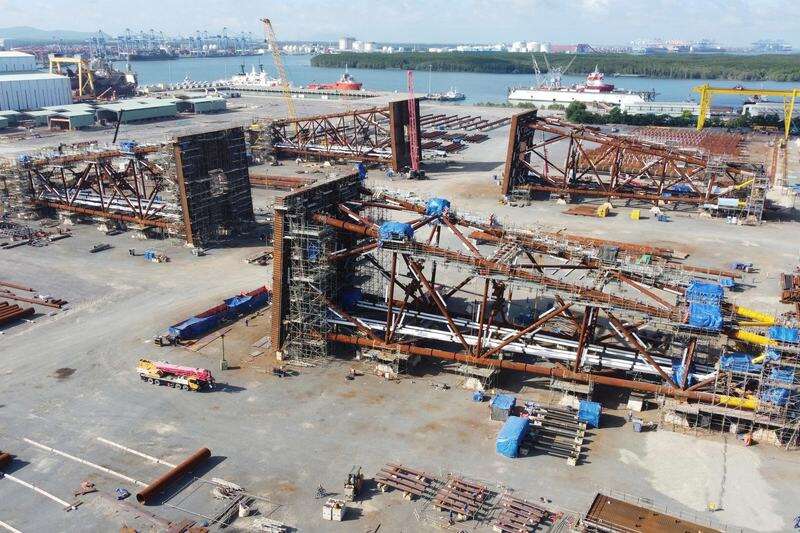
Vietnam Energy Projects Newsletter – October 3, 2026
Only one out of 18 LNG-to-power projects is on schedule; Pacifico Energy has been granted a survey license for a 1.3 GW offshore wind project; the first turbine has been installed at the 128 MW nearshore wind farm in Vinh Long; and the oil and gas sector is entering a new investment cycle.
Read more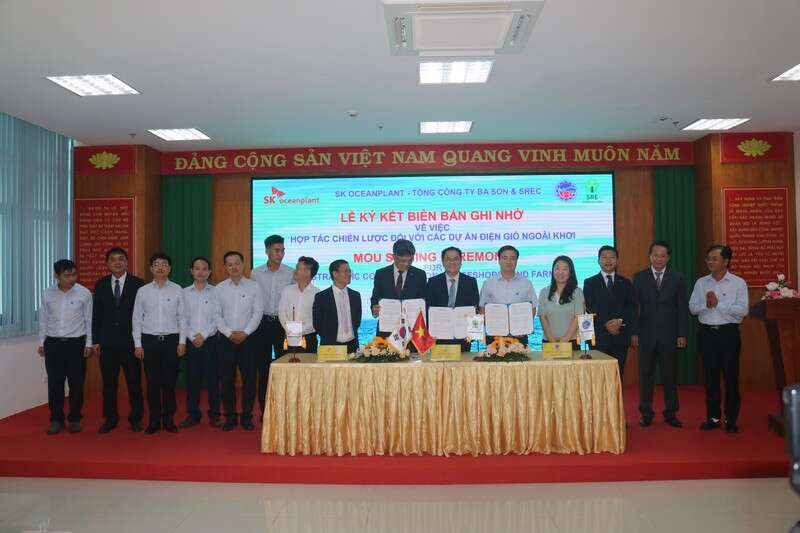
Signing ceremony for the Memorandum of Understanding on strategic cooperation with SK Oceanplant
On the morning of October 27, 2023, a signing ceremony for a memorandum of understanding (MOU) on strategic cooperation was held at Ba Son Port between the joint venture SRE Construction Joint Stock Company (SREC), Ba Son Corporation, and SK Oceanplant (SKOP).
Read more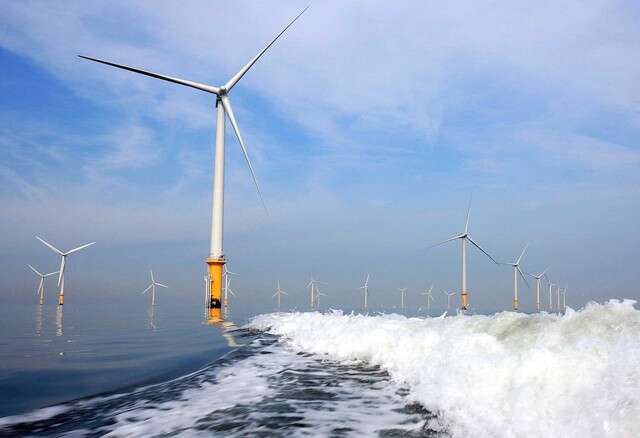
Marine spatial planning opens up opportunities for offshore wind power development
Accelerating marine spatial planning will unlock immense potential for the development of offshore wind power in Vietnam. This also presents a significant opportunity for Vietnam to increase its revenue and achieve net-zero emissions by 2050.
Read more
Comments (0)
Hide commentsNo comments yet - be the first!
Leave a comment